Project Green-Tech Nexus: Climate Security, Youth Livelihoods, and Rural Digital Infrastructure
An integrated infrastructure framework designed to address climate vulnerability, youth employment and regional digital disparities through modular, solar-powered community nodes.
Project Green-Tech Nexus is an integrated infrastructure framework designed to address three intersecting national priorities in Nigeria: climate vulnerability, youth unemployment and regional digital disparities. Built around off-grid, solar-powered community nodes—with the flagship initiative in Taraba State as a project reference—the model brings together climate-adaptation micro-nurseries, hardware-refurbishment labs and ground-level socio-economic data tracking.
We seek strategic partnerships with government ministries, state and local authorities and development agencies to adapt and scale this public-utility model across a 21-state network.
The model is intended to work alongside government ministries, local authorities, community leadership and development partners rather than operate as a standalone intervention.
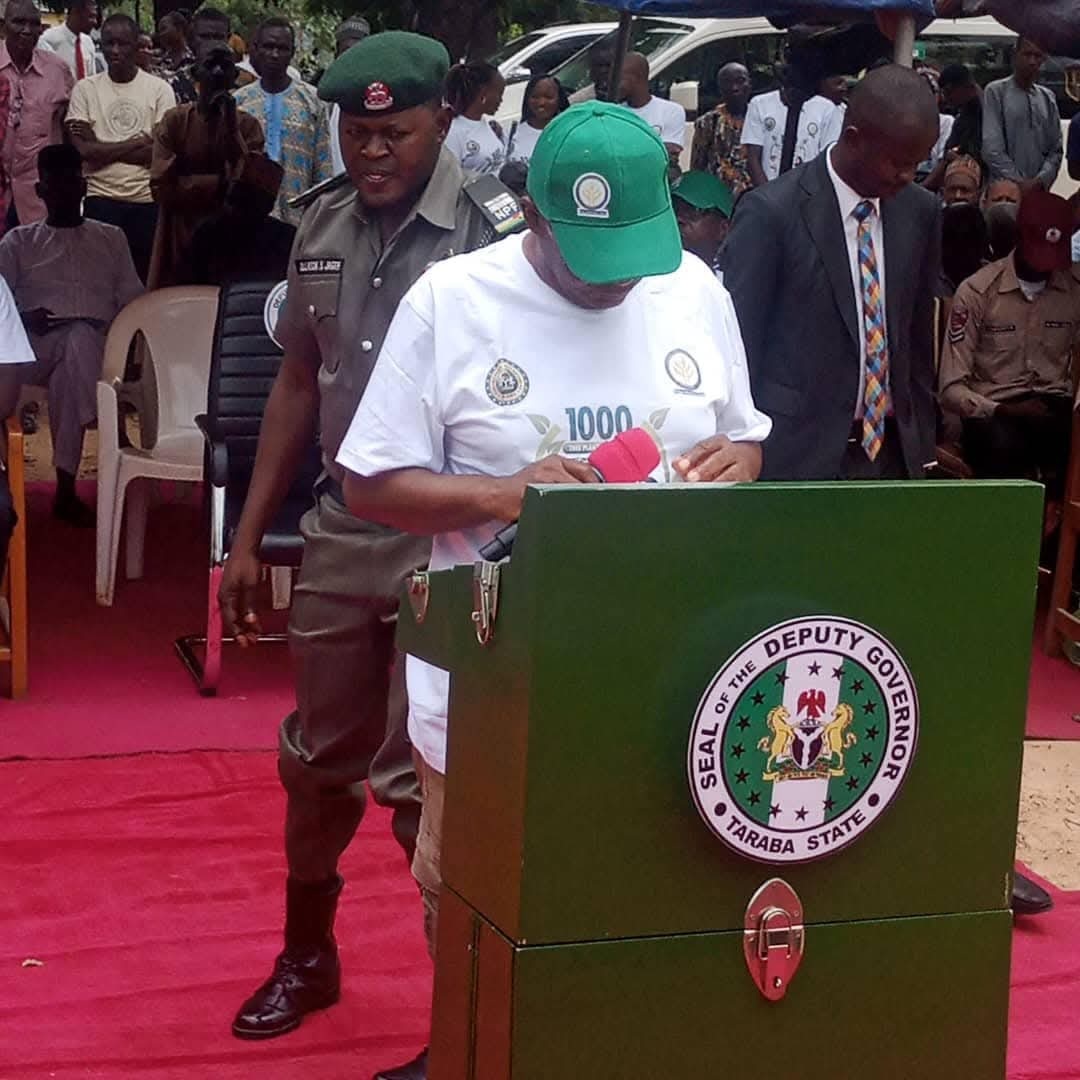
Taraba field activity provides a visual reference for the kind of local engagement and environmental work that can inform future hub development.
Support land restoration, soil-erosion mitigation and watershed resilience through native-tree propagation, agroforestry and community restoration activities.
Technical and vocational education pathways equip rural youth with market-relevant skills in solar maintenance, electronics repair and related services.
Ground-level intake and data systems can capture agricultural, demographic and infrastructure information to support planning, program evaluation and emergency-response coordination.
Community micro-nurseries can propagate native tree species for public and community land-restoration programs, with final nursery scale determined by site, water availability and implementation capacity.
Proposed 10kW-class solar systems can provide charging, basic community power services and digital workstations, with connectivity technologies selected according to local feasibility and operating costs.
Vocational certification can align youth skills with local demand for clean-energy maintenance, electronics repair and hardware-support services.
State and local partnerships can integrate land, community leadership, environment, youth, education and other relevant ministries into a coordinated implementation framework.
These targets are planning projections and should be validated through feasibility studies, engineering design, baseline assessments and implementation agreements.
Potential contributions include land titles or allocations, inter-ministerial coordination, regulatory facilitation and integration of community leadership.
$485,000 requested per regional hub cluster for proposed solar micro-grid installation, modular hub construction and the initial 12-month program rollout.
By Month 18, the model targets recurring-cost coverage through local micro-service revenues for salaries, utilities and maintenance, subject to implementation performance.
For ministries, state leadership, development agencies and bilateral or multilateral partners interested in feasibility, co-funding, land partnerships or implementation coordination.